Advertisements
The Elite Recovery Routine That Changed Everything For Me
Here’s a stat that honestly blew my mind: according to a study published in the Frontiers in Physiology, athletes who follow a structured post-workout recovery protocol see up to 60% faster muscle repair than those who just wing it. Sixty percent! I spent years thinking I was doing enough by just stretching for five minutes and chugging a protein shake. Turns out, I was leaving so much on the table.
An elite recovery routine isn’t just for professional athletes anymore. It’s for anyone who trains hard and wants to actually feel good the next day. And honestly, once I started taking recovery seriously, my entire fitness game leveled up.
Why I Used to Suck at Recovery
I’ll be real with you — for the longest time, recovery was an afterthought. I’d crush a heavy leg day, grab my bag, and head straight to the car. Maybe I’d foam roll if the gym wasn’t too crowded, but that was about it.
Then I hit a wall. I’m talking constant soreness, nagging knee pain, and sleep that felt like it wasn’t doing anything for me. A buddy of mine who coaches college swimmers finally sat me down and said, “Dude, your body isn’t broken. Your recovery is.”
That conversation was a turning point. He introduced me to the idea of building an actual system around rest and repair — not just hoping my body would figure it out on its own.
Advertisements
The Core Pillars of an Elite Recovery Routine
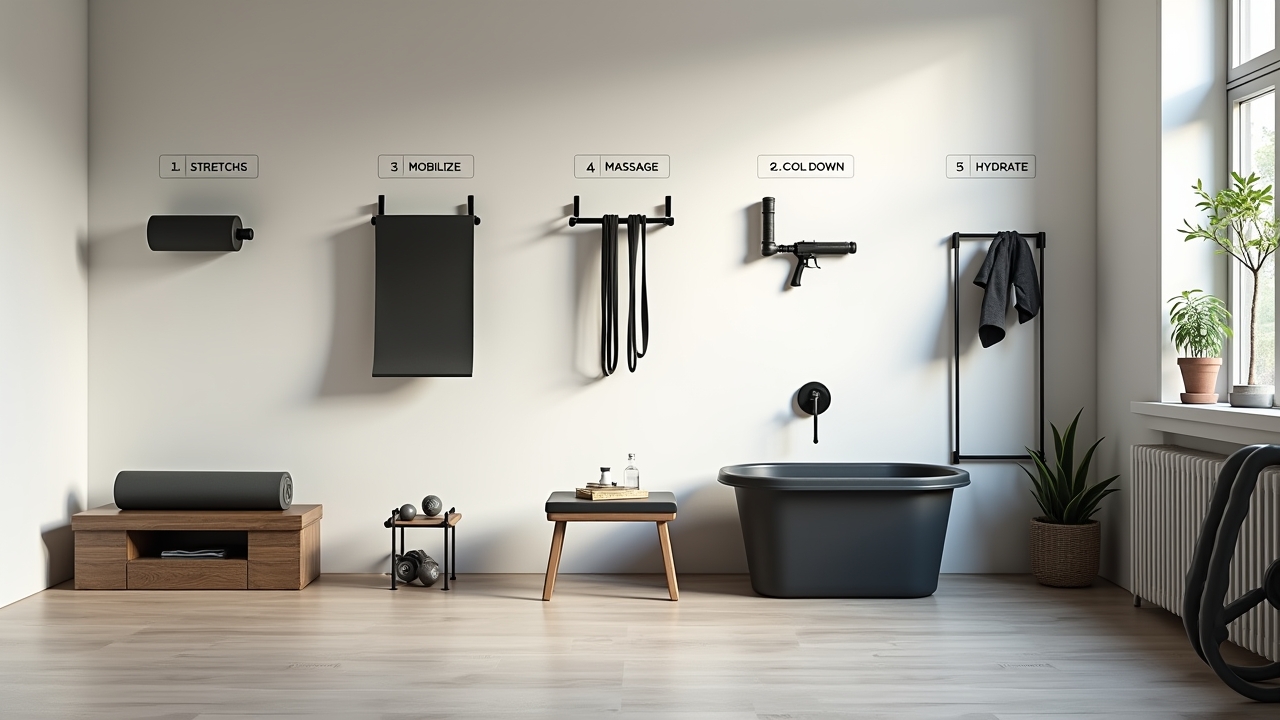
So what does a legit recovery protocol actually look like? It’s not one magic trick. It’s a combination of several practices done consistently, and here’s what’s been working for me:
- Active recovery sessions — Light movement on rest days like walking, swimming, or easy cycling to promote blood flow without taxing the muscles.
- Cold exposure and contrast therapy — Cold plunges or cold showers followed by warmth. The research from the National Library of Medicine supports cold water immersion for reducing delayed onset muscle soreness.
- Sleep optimization — This is the big one. I started aiming for 7-9 hours of quality sleep and it was a game changer.
- Nutrition timing — Getting protein and carbs in within that post-workout window matters more than I thought.
- Mobility and soft tissue work — Foam rolling, stretching, and even percussion massage guns have become part of my nightly wind-down.
Cold Exposure Was the Missing Piece
I gotta be honest, I resisted cold therapy for a long time. The idea of sitting in ice water after an already exhausting workout sounded miserable. But once I tried it — and I mean actually committed to it for a few weeks — the difference was undeniable.
My inflammation went down noticeably. My joints felt less stiff in the mornings. And there was this weird mental clarity that came with it too, almost like a natural high after the initial shock wore off.
I started simple with cold showers, about 2-3 minutes at the end of my regular shower. Eventually I worked up to full cold plunges a couple times a week. If you’re curious about the science behind it, Dr. Andrew Huberman’s research on deliberate cold exposure is a great place to start.
Sleep Is the Real Performance Enhancer
Here’s something nobody told me until embarrassingly late in life: you don’t build muscle in the gym. You build it while you sleep. Growth hormone production, tissue repair, nervous system restoration — it all happens when you’re knocked out.
I made a few small changes that had a huge impact. I cut screen time 45 minutes before bed, kept my room cold (around 65°F), and started using magnesium glycinate before sleep. Within two weeks, my recovery between sessions was noticeably faster.
Make It Yours and Keep Showing Up
Look, there’s no one-size-fits-all elite recovery routine. What works for me might need tweaking for you, and that’s totally fine. The important thing is that you actually have a plan instead of just hoping rest days do the heavy lifting.
Start with one or two changes — maybe prioritize sleep and add some cold exposure. Build from there. And please, listen to your body. Pushing through pain isn’t tough, it’s just dumb. I learned that the hard way.
If you want to dig deeper into recovery strategies, cold therapy methods, and science-backed wellness tips, come hang out with us over at the Freeze Method blog. We’re always sharing stuff that’s been tested and actually works. See you there!